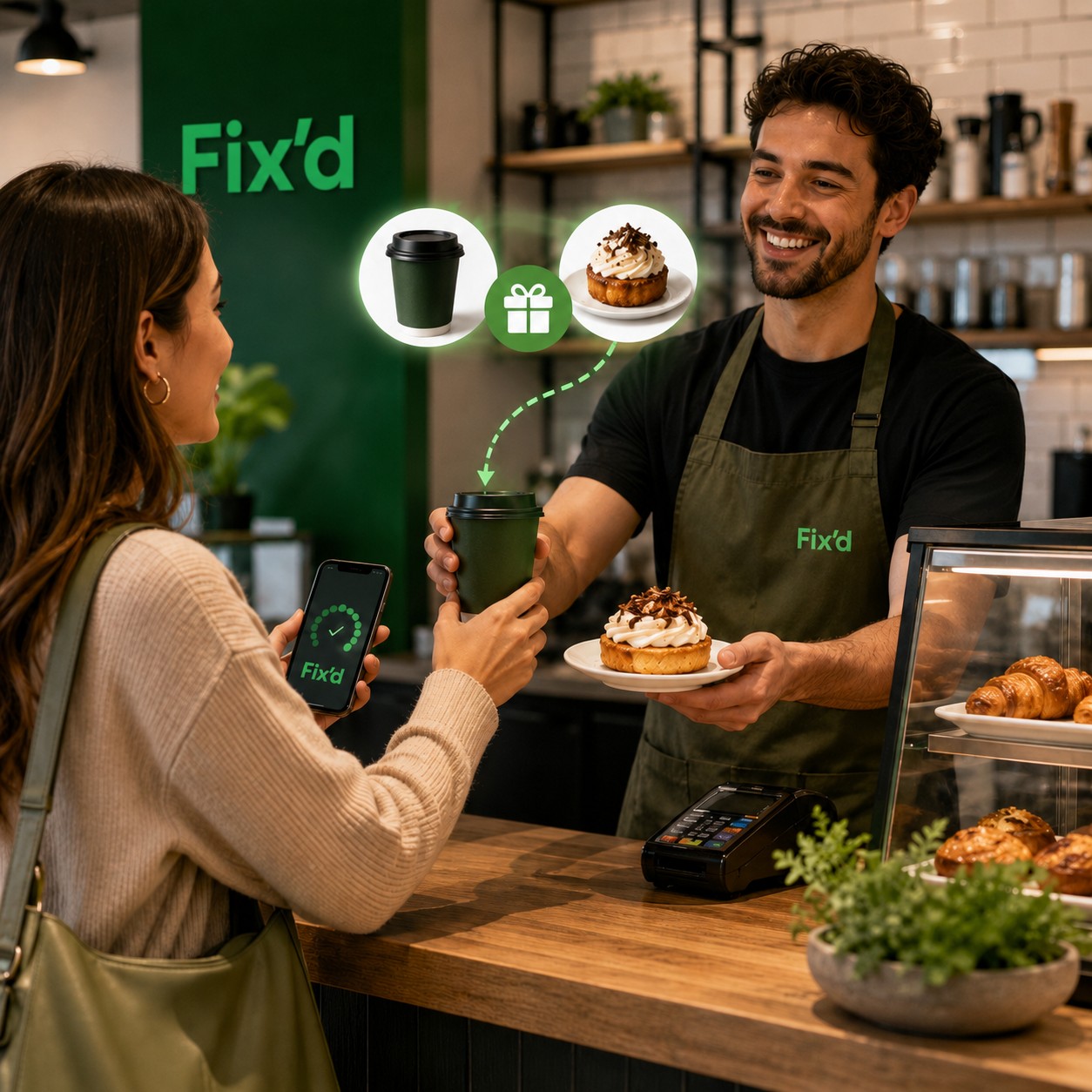
What Is a Good Loyalty Program?
What Is a Good Loyalty Program?
A good loyalty program is not the one with the biggest reward.
That sounds wrong at first. Surely customers want more, not less. A free coffee. A free haircut. A free lunch. A large discount after ten visits. Something impressive enough to make them come back.
But that is not really how good loyalty programs work.
A good loyalty program is not about giving things away. It is about giving customers a reason to come back while still making sense for the business.
That difference matters.
Because a loyalty program that feels generous but destroys your margin is not a loyalty program. It is a slow discount machine. And the worst part is that it often gives the biggest discounts to the people who already liked you and would probably have bought from you anyway.
A good loyalty program should do something else.
It should protect the sale, reward the customer, and create the feeling that the next visit already has a reason to happen.
Free is not always the best reward
The most common idea behind loyalty is simple:
"Buy ten, get one free."
There is nothing wrong with that in theory. It is easy to understand. Customers know the format. Businesses know how to explain it.
But it can also be expensive in a way that is easy to miss.
Imagine a coffee shop offering a free coffee after several visits. Coffee is probably one of its best-selling products. Many regular customers would have bought that coffee anyway. So when the business gives it away, the real cost is not only the ingredients. The real cost is the lost sale.
That is the problem with giving away your main product.
You are not just rewarding the customer. You may be replacing revenue from a customer who was already willing to pay.
This does not mean freebies are always bad. But free best-sellers should be treated carefully. If the reward is the exact thing the customer normally buys, the business may be giving up too much.
A better rule is this:
Give away margin, not the whole transaction.
Protect the sale
A good loyalty reward should usually keep the customer buying.
That is why complements, upgrades, add-ons, and discounts often work better than pure freebies.
A restaurant can offer a free dessert with a meal. The meal is still purchased.
A café can offer a free syrup, topping, pastry discount, or size upgrade. The coffee is still purchased.
A beauty salon can offer an upgrade to a service, a discount on an add-on, or a small product sample. The appointment still happens.
A car wash can offer a premium finish upgrade. The wash is still paid for.
In all of these cases, the customer feels rewarded, but the business has not lost the full transaction. The reward affects margin on one visit. It does not remove the sale entirely.
That is the heart of a good loyalty program.
The customer should feel, "I got something."
The business should still feel, "This visit was worth having."
When both are true, loyalty becomes sustainable.
The reward should change behaviour
A loyalty program should not only reward what already happens. It should create a reason for one more visit.
That is the practical question every business should ask:
What behaviour do I want to encourage?
Do you want customers to come back more often? Try another product? Visit during quieter hours? Bring a friend? Choose you instead of the similar place nearby?
The reward should support that behaviour.
If your regular customers already buy coffee every morning, giving them free coffee may simply reduce what they pay you. But offering a small reward after a few visits may make a new customer return one more time. Offering an upgrade may make a regular feel appreciated without replacing the core sale. Offering a reward tied to a slower day may help balance demand.
A good loyalty program is not random generosity. It has a job.
Its job is to make the next visit more likely.
The first reward should come quickly
A mistake many businesses make is placing the first reward too far away.
"Come ten times and get something" may be simple, but on the first visit it can feel distant. For a customer who has no habit with you yet, ten visits is a big ask.
That is why the first reward should usually come earlier.
Not a big reward. Not an expensive reward. Just a small one.
After two or three visits, the customer should feel that the program is real. They scanned, collected, returned, and received something. The loop has closed.
That first reward is not really about the reward itself. It is a hook.
It teaches the customer:
"This works."
That matters. Once people believe progress is real, they are more likely to continue.
A small reward after three visits can be more powerful than a large reward after ten, because it creates momentum. It gives the customer a near target. It turns the loyalty program from an abstract promise into a visible path.
Tiered rewards beat one distant prize
This is why tiered rewards are often better than a single large reward.
Instead of:
"Visit ten times and get a reward."
Think:
"Visit three times and get a small reward. Visit six times and get a better reward. Visit ten times and unlock the top reward."
The customer is always close to something.
That feeling is important. A half-finished loyalty card is powerful because it represents progress. But an empty card is weak. If the first reward is too far away, many customers never emotionally enter the program.
A tiered structure solves this.
The first reward creates belief. The second creates momentum. The larger reward gives the customer something to aim for.
It also lets the business manage cost better. The early reward can be very small. The mid-level reward can be meaningful. The top reward can feel special without being reckless.
The goal is not to make the program complicated. The goal is to make it feel alive.
Keep the customer always in progress
There is another problem with many old loyalty programs.
The customer collects points or stamps. They finally redeem the reward. Then they go back to zero.
Psychologically, that can feel like the end.
A better program makes the customer feel that even after claiming a reward, they are already moving toward the next one.
This is one reason profitable reward transactions are so useful. If the customer redeems a reward but still makes a purchase, the business can allow them to earn a new point in the same transaction.
That changes the feeling completely.
The customer does not think:
"I finished."
They think:
"I got something, and I have already started again."
That is exactly what a loyalty program should create: continuous progress.
The best loyalty programs do not have a hard stop. They have a rhythm.
Visit. Earn. Get rewarded. Continue.
Do not make the customer feel cheap
There is also an emotional side to reward design.
A loyalty program should feel like appreciation, not bargaining.
This is why blunt discounts are not always the strongest option. A discount says, "Pay less." That can work, but it can also train customers to think mostly about price.
An upgrade says something different.
It says, "You are a regular, so we are treating you better."
A free add-on says, "We noticed you came back."
A small surprise says, "We appreciate you."
For local businesses, this matters. Cafés, restaurants, salons, gyms, studios, and neighbourhood services are relationship businesses. Customers do not choose them only because of price. They choose them because of habit, convenience, trust, taste, service, and familiarity.
A good loyalty program should strengthen that relationship.
It should not turn it into a negotiation.
Perceived value matters more than cost
The best rewards often have higher perceived value than actual cost.
A dessert can feel generous even if the cost to the business is manageable.
A size upgrade can feel visible and satisfying even if the extra cost is small.
A priority booking slot may cost almost nothing but feel exclusive.
A small "regulars only" benefit can make people feel recognized.
This is where good reward design becomes creative.
The question is not, "What is the most expensive thing we can give?"
The question is, "What will the customer value more than it costs us?"
That is the sweet spot.
A good reward feels meaningful to the customer and sustainable for the business.
The program must fit the business
There is no universal perfect loyalty program.
A coffee shop is not a barber. A barber is not a gym. A gym is not a car wash. A restaurant is not a dental clinic.
Different businesses have different visit rhythms, margins, habits, and customer expectations.
A customer might visit a café several times a week. A ten-visit reward may be realistic.
A customer might visit a barber once a month. A ten-visit reward may feel too far away.
A customer might visit a dentist twice a year. A standard visit-based loyalty program may not make sense at all.
The slower the natural visit frequency, the sooner the customer needs to feel progress.
That is why loyalty programs should be designed around the business, not copied blindly from somewhere else.
The structure that works beautifully for a lunch spot may be wrong for a beauty salon. The reward that works for a gym may be irrelevant for a bakery.
A good loyalty program starts with the real behaviour of real customers.
The simple test
There is one simple test every business can use.
Ask yourself:
"If many customers reached this reward, would I be happy?"
If the answer is no, the reward is wrong.
Because if the program works, people will use it. That is the point. A loyalty program should not become a problem when customers engage with it.
If the business starts hiding the reward, changing the rules, delaying redemption, or feeling annoyed when regulars claim what they earned, the program was badly designed from the start.
A good loyalty program should be something the business wants customers to use.
It should be sustainable when it succeeds.
So what is a good loyalty program?
A good loyalty program is simple enough to understand, rewarding enough to matter, and sustainable enough to keep running.
It protects the main sale.
It rewards customers without destroying margin.
It gives the first reward quickly.
It uses tiers instead of one distant prize.
It keeps customers in progress.
It feels like appreciation, not desperation.
And most importantly, it fits the specific business.
Because loyalty is not built by copying a stamp card and hoping for the best. It is built by giving customers a clear, repeated reason to choose you again.
Not because you gave everything away.
Because coming back feels worthwhile.
There is no single perfect loyalty program for every business. A café, a restaurant, a barber, a gym, a bakery, a salon, and a car wash all need different structures.
That is why the next step is practical.
What should a loyalty program actually look like for different types of businesses?
That is where loyalty becomes more than an idea.
It becomes a system.