When Should I start a Loyalty Program for my Business? Now!
Start Your Loyalty Program Before Your Customers Build the Habit Somewhere Else
Most small businesses think about loyalty programs too late.
They usually start asking the question when a competitor launches one, when regular customers start appearing less often, or when sales feel a little softer than before. But by then, the problem is already harder to solve. A loyalty program is not just a way to give a discount. It is a way to shape customer habits before someone else does.
If your business does not have a loyalty program yet, the best time to start is now.
Loyalty is about share of wallet, not just "loyalty"
A customer who likes your business does not automatically give you all of their spending.
They may buy coffee from you in the morning, but another one near the office in the afternoon. They may visit your bakery at the weekend, but buy from another one near their child's school during the week. They may love your restaurant, but still choose a different place when they are shopping nearby, meeting a friend, or walking home.
This is the real competition.
It is not only the business across the street. It is every convenient alternative in the customer's daily route.
A loyalty program gives customers a simple reason to consolidate more of those purchases with you. Not every purchase. Not every time. But one more visit per month from a regular customer can change the economics quickly.
For many businesses, the cost of a reasonable reward after several purchases is modest compared with the value of an extra purchase, especially when that customer was already likely to buy the category somewhere. A free coffee, a small discount, a dessert, an upgrade, or a simple reward after several visits can pay for itself many times over if it shifts even a small part of the customer's monthly spend back to you.
Without a loyalty program, you may not be losing the customer completely. But you may be quietly losing part of their wallet every week.
It is one of the cheapest ways to grow
Very few businesses live only from repeat customers. Most have a mix: regulars, occasional customers, first-time visitors, tourists, passers-by, people who came once because they were nearby.
That mix is normal. But it also hides a major opportunity.
If even a small percentage of one-off customers become repeat customers, the value of the business changes. They visit more often. They become more familiar with the menu, products, or services. They are more likely to try something additional. They become easier to serve. They are more likely to recommend you.
This is why retention is so powerful. A customer you already served once is not a cold lead. They know where you are. They know what you offer. They have already made the first decision. The next decision is easier — but only if you give them a reason to come back.
A loyalty program does exactly that.
It turns "thanks for coming" into "come back and continue your progress." The first point or scan matters because it creates momentum. The customer has started something. And once people feel they have started something, they are more likely to continue it.
For many businesses, repeat customers also do not replace new customers. A café can usually serve the regular and the walk-in. A barber can fill empty slots more predictably. A takeaway place can increase frequency without needing a new location. A local shop can build recurring demand instead of depending only on footfall.
That is what makes loyalty such an efficient growth lever. You are not only buying attention. You are increasing the value of customers who already crossed your path.
Being first is a blessing
One of the most common objections is: "Why should I bother if nobody around me has a loyalty program?"
That is exactly why you should bother.
If no competitor offers a reward, even a modest reward stands out. You do not need to overpay. You do not need to launch something complicated. You simply need to give customers a reason to choose you again.
The competition is not "your huge reward versus their huge reward." The competition is "your modest reward versus no reward."
All else equal, modest beats nothing.
Over time, this matters. Customers start building a habit. They remember that progress is waiting with you. They know that the next visit gets them closer to something. They start choosing you by default.
This does not mean the whole market suddenly moves to you. Loyalty does not work like magic. But it does work like compounding. A few more repeat visits, a few more customers who come back, a few more people who choose you first — repeated over months — can create meaningful profitability gains.
And the best part of being first is that you set the starting point.
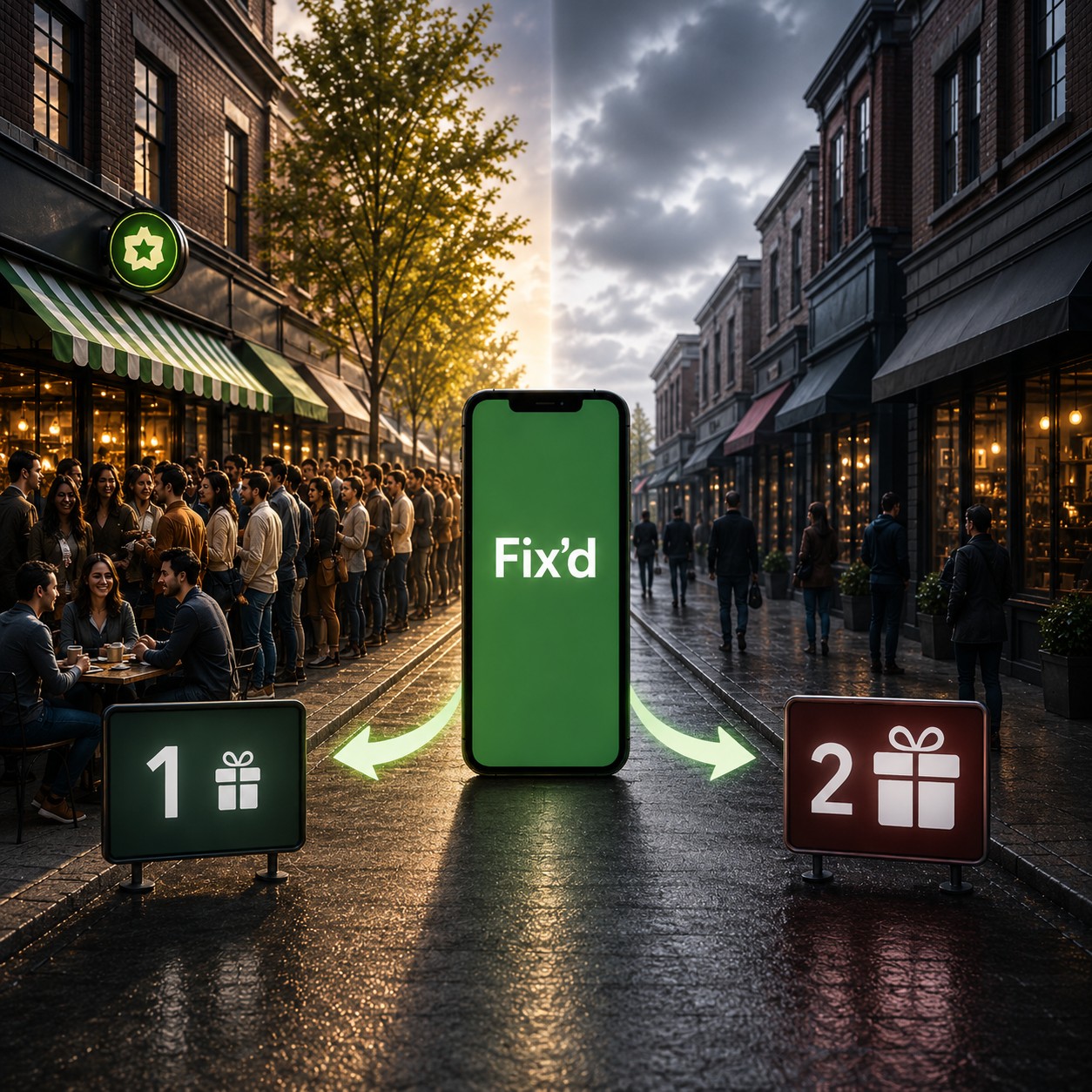
When competitors finally notice that your program is affecting their visits, they have a harder job. They are not competing against nothing anymore. They are competing against a habit you already built. To pull people back, they may need to offer more, spend more, or discount more aggressively.
Being first lets you build loyalty cheaply. Being late often means buying it back expensively.
And if you are already late?
Start anyway.
A loyalty program will not magically bring back customers who have already built a routine somewhere else. If a nearby competitor has trained people to collect points, unlock rewards, and keep returning, you may need a stronger offer to break that loop.
But doing nothing is worse.
Without a loyalty program, you risk becoming dependent on die-hard fans, random footfall, and customers who have not yet discovered a better reason to go elsewhere. That is not a strong position. It is a slow leak.
Starting now gives you a chance to stop the leak. You can reward the customers who still come. You can give occasional visitors a reason to return. You can start rebuilding habit, visit by visit.
The longer you wait, the more expensive that becomes.
A loyalty program does not need to be complicated
Many businesses delay because they imagine a loyalty program as a big technical project — an app, a contract, a complex integration, or a heavy operational burden.
It does not have to be.
A good loyalty program can start with a simple promise:
Visit several times. Earn points. Get a reward.
That is enough to begin. You can improve it later. You can adjust the reward. You can add levels. You can test what customers respond to. The important thing is to create the habit loop now.
The first version does not need to be perfect. It needs to exist.
The real question
The question is not whether loyalty programs work.
The question is who in your market will use one first, learn fastest, and build the customer habit before everyone else reacts.
If it is you, loyalty becomes a low-cost advantage.
If it is your competitor, loyalty becomes something you eventually have to fight against.
Start now, while the reward can still be modest and the habit is still available to build, not buy back.