Run a Promotion. Keep the Loyalty.
Run a Promotion. Keep the Loyalty.
Loyalty programs work.
At least that's what every loyalty program vendor will tell you.
But you've also heard that countless other products work, that every new service is worth it, and that you can't go wrong buying whatever is being offered to you right now.
If you believed every salesperson who walked through your door, you'd probably have gone out of business long ago.
So we're not asking you to trust us.
We're not going to show you statistics from other businesses using Fix'd. We're not going to quote studies on loyalty program ROI. And we're not going to insist that something that worked elsewhere will necessarily work for your business.
Instead, we're offering you a simple way to find out for yourself.
Not through someone else's results.
Through a small experiment in your own business.
Not a program. A promotion.
A permanent loyalty program sounds like a commitment. So don't start one.
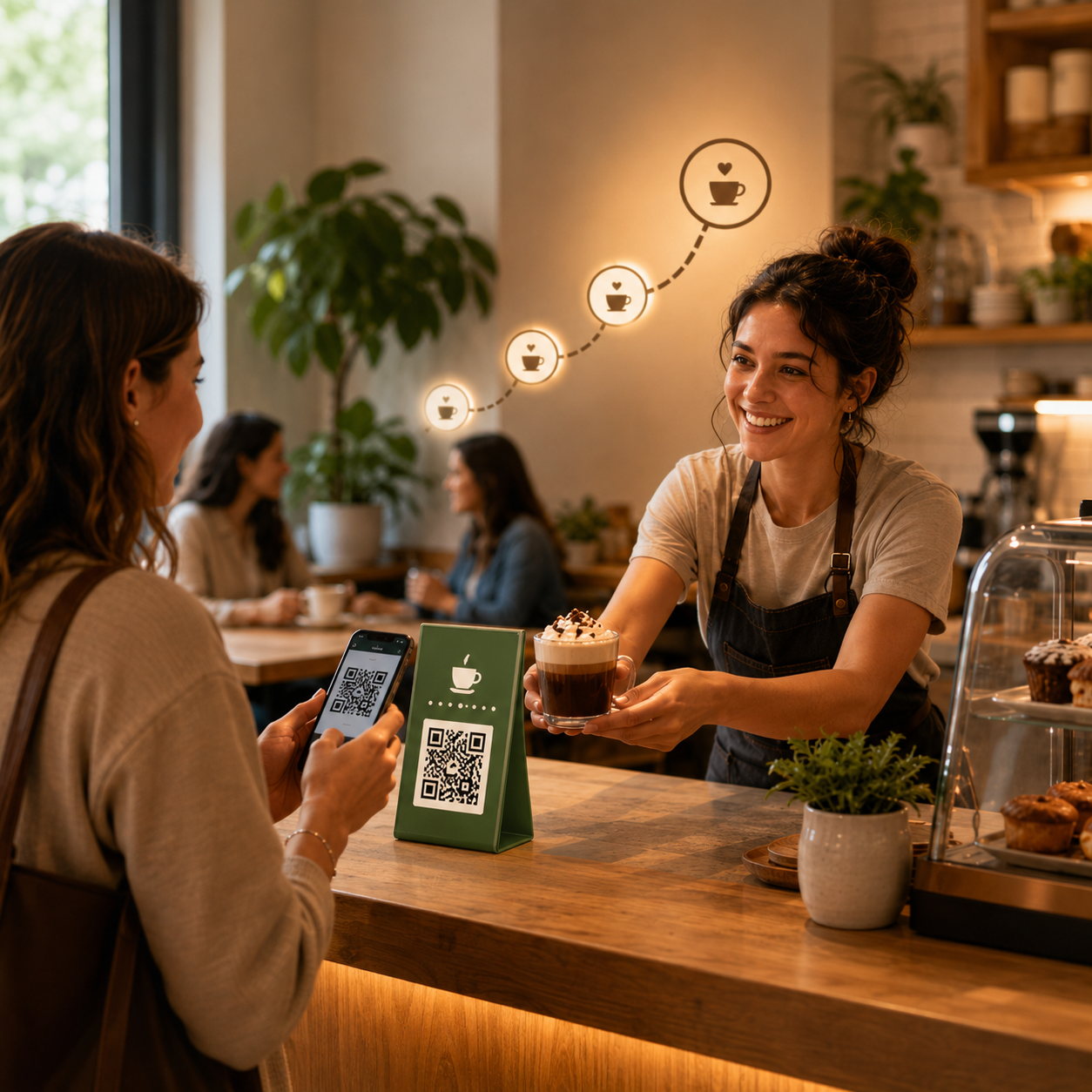
Run a one-month promotion that uses the mechanics of a loyalty program. For example:
- first reward at 3 points;
- second reward at 10 points;
- a clear start and end date;
- a simple name like "August Promotion".
Run it for one month and see what happens.
Do customers scan? Do they come back? Do they reach the first reward? Do they keep going toward the second? Does the program make economic sense for your business?
These are the questions the promotion will answer. With data from your own venue, your own customers, and your own prices.
What does the experiment cost?
Fix'd has no monthly subscription. Fix'd is free — and stays free.
The initial cost is:
- a few minutes to set up the program;
- a few minutes to explain to your staff how it works;
- one printed sheet with a QR code.
The process is simple, and we can help you with the setup. Let's be conservative and say the whole thing takes ten minutes.
After that, the promotion is live.
There's no software fee and no cost for inactive customers. The only meaningful ongoing cost is the value of the rewards customers actually receive. And you decide what those rewards are and how many points they require.
The reward can stay profitable
With a well-structured reward, even the transaction where the customer redeems it can remain profitable.
A concrete example:
A customer reaches their third point and gets the reward — a free extra espresso shot in their coffee.
The shot costs you 20 cents. The coffee sells for 2 euros.
On that sale, you make 1.60 euros instead of 1.80.
From a customer who has already made 3 purchases to get there.
The same principle works with a free topping, a higher tier of service, or an upgrade tied to a core purchase. The customer gets something valuable, but the core sale stays yours. You don't lose the transaction — you just earn slightly less on it.
We have a separate article on how to structure a good reward, and when you're setting up, we can always help you choose rewards that fit your specific business.
Notice the other side of the math, too:
If customers participate, come back, and earn rewards — yes, you'll have some transactions with a slightly lower margin. But you'll also have visits, purchases, and activity that otherwise wouldn't exist.
If customers don't participate — few rewards get redeemed, and your cost stays close to zero.
You only pay when it works. That's the essential difference.
At the end of the month, you decide
If you like the results, you rename the promotion and continue it as a permanent loyalty program.
Customers keep all the points they've already collected. Their progress isn't lost. They don't have to start over.
The promotion becomes a loyalty program.
If you don't like the results, you take down the QR code, delete the program, and move on.
No contract. No subscription. No long-term commitment.
The math in short
Ten minutes to set up.
One printed QR code.
One month of rewards that only cost you anything when customers actually earn them.
If it works, you keep the program and the loyalty you've already built.
If it doesn't, you stop.
Run a promotion. Keep the loyalty.